Fusarium head blight (FHB) is a major disease of wheat in the middle and lower reaches of the Yangtze River and the southern Huang-Huai wheat region. Continuous rainy weather during the flowering stage often leads to widespread outbreaks, resulting in yield losses in mild cases and diseased spikes in severe cases. The key to controlling FHB lies in precisely targeting the early flowering stage as the optimal application window and selecting fungicides with systemic activity that can be translocated to the spikes—thiophanate-methyl is such a systemic fungicide. Xinyi Jiatuo thiophanate-methyl 500 g/L suspension concentrate (SC) is registered for the control of Fusarium head blight in wheat.
Fusarium head blight is caused by infection with *Fusarium graminearum* and other pathogens, with wheat being most susceptible from full heading to the flowering stage. If this period coincides with two or more consecutive days of rainfall and high humidity, spores carried by rainwater onto the floral organs can produce visible symptoms within a few days. By the time white heads or pinkish mold masses are observed, the pathogen has already penetrated the rachis, and the efficacy of subsequent fungicide applications is limited.
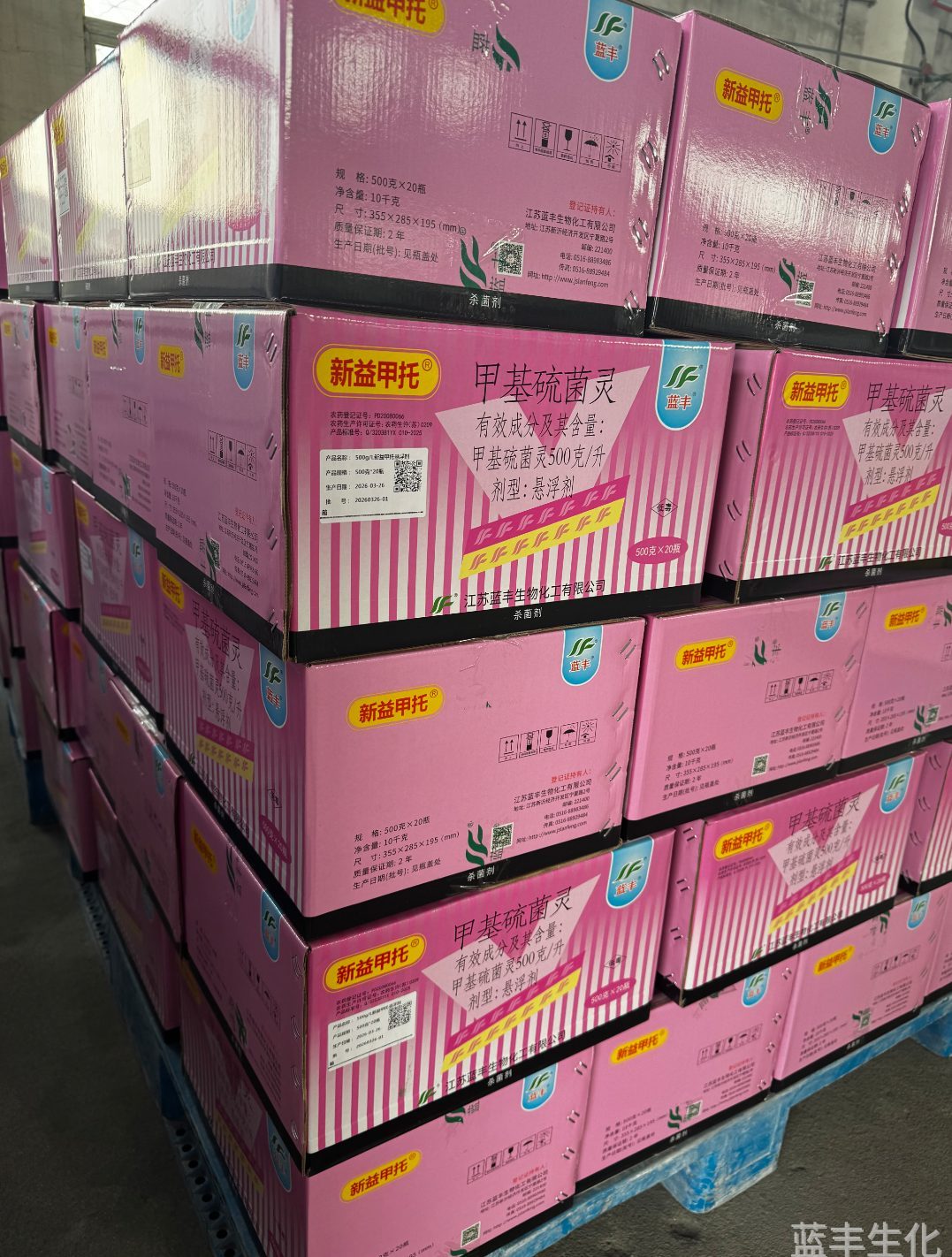
To control Fusarium head blight, two key points must be grasped: first, timing—apply the first spray at full heading when florets become visible, and follow up with a second spray at peak flowering, adjusted according to weather conditions; second, fungicide selection—preferably use a systemic product that can be translocated upward to the spike. Thiophanate-methyl is a benzimidazole-type systemic fungicide that, once absorbed, is transported via the plant's conductive tissues to the actively heading sites, which is precisely why it is commonly used to suppress Fusarium head blight. For Xinyi Jiatuo thiophanate-methyl 500 g/L suspension concentrate, apply 120–160 mL per mu diluted in water as a foliar spray, with an interval of 7–10 days between the two applications.
Even spraying coverage is critical to the effectiveness of the application. The pathogen of Fusarium head blight tends to lodge in the crevices between the rachis and the glume junctions, so sufficient water volume is essential to thoroughly wet the entire spike from the inside out. If the fungicide only reaches the leaves while the spikes remain untreated, the application is essentially wasted. Avoid spraying on windy days or shortly after rainfall, as rain occurring before the spray solution has dried will reduce the efficacy.
One final reminder: fungicides such as thiophanate-methyl should not be applied too many times consecutively within the same growing season. It is recommended to rotate with fungicides of different modes of action, such as triazoles, to ensure stable efficacy and delay the development of resistance. For specific dosage per mu and water volume, always refer to the product label. Disease occurrence patterns and weather conditions vary by region, so do not follow instructions mechanically.