Annual grass weeds and some broadleaf weeds in summer corn fields compete with the crop for water, nutrients, and light, and fields with severe weed infestations show significant yield reductions. Herbicide selection for weed control should be based on the target weed spectrum—annual grass weeds and some broadleaf weeds—and the appropriate growth stage must be identified. Metolachlor 72% EC is registered for the control of annual grass weeds and some broadleaf weeds in summer corn fields.
For annual weeds in summer maize fields, the herbicides used for grass weeds and broadleaf weeds differ, and the application methods also vary between pre-emergence and post-emergence treatments. Soil-residual herbicides should be applied after sowing but before crop emergence, forming a herbicide film over the soil surface. For post-emergence foliar treatments, spray directionally when weeds are at the 3–5 leaf stage and when the crop is relatively safe.
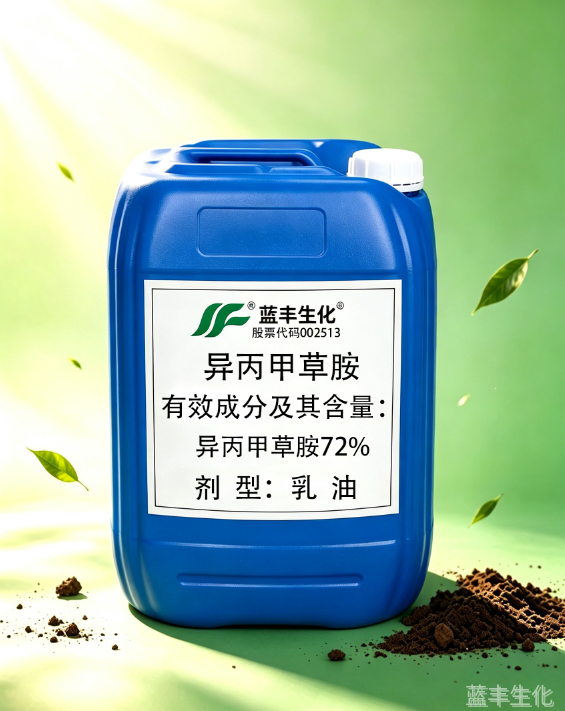
Metolachlor 72% EC (Emulsifiable Concentrate), Registration No. PD20081673 (subject to the actual label). Used for the control of annual grass weeds and certain broadleaf weeds in summer corn fields, at a rate of 100–150 mL per mu, applied by spraying. Dilute with water according to the weed spectrum and crop growth stage, and spray evenly. Take care to avoid spray drift onto the crop.
For stem and leaf herbicide application, lower the nozzle and spray only the weeds to prevent spray drift from reaching the crop and causing injury; do not spray on windy days or before rainfall. Dosage varies considerably among different formulations—conduct a small-scale trial first before large-scale application. Always follow the product label for specific instructions.