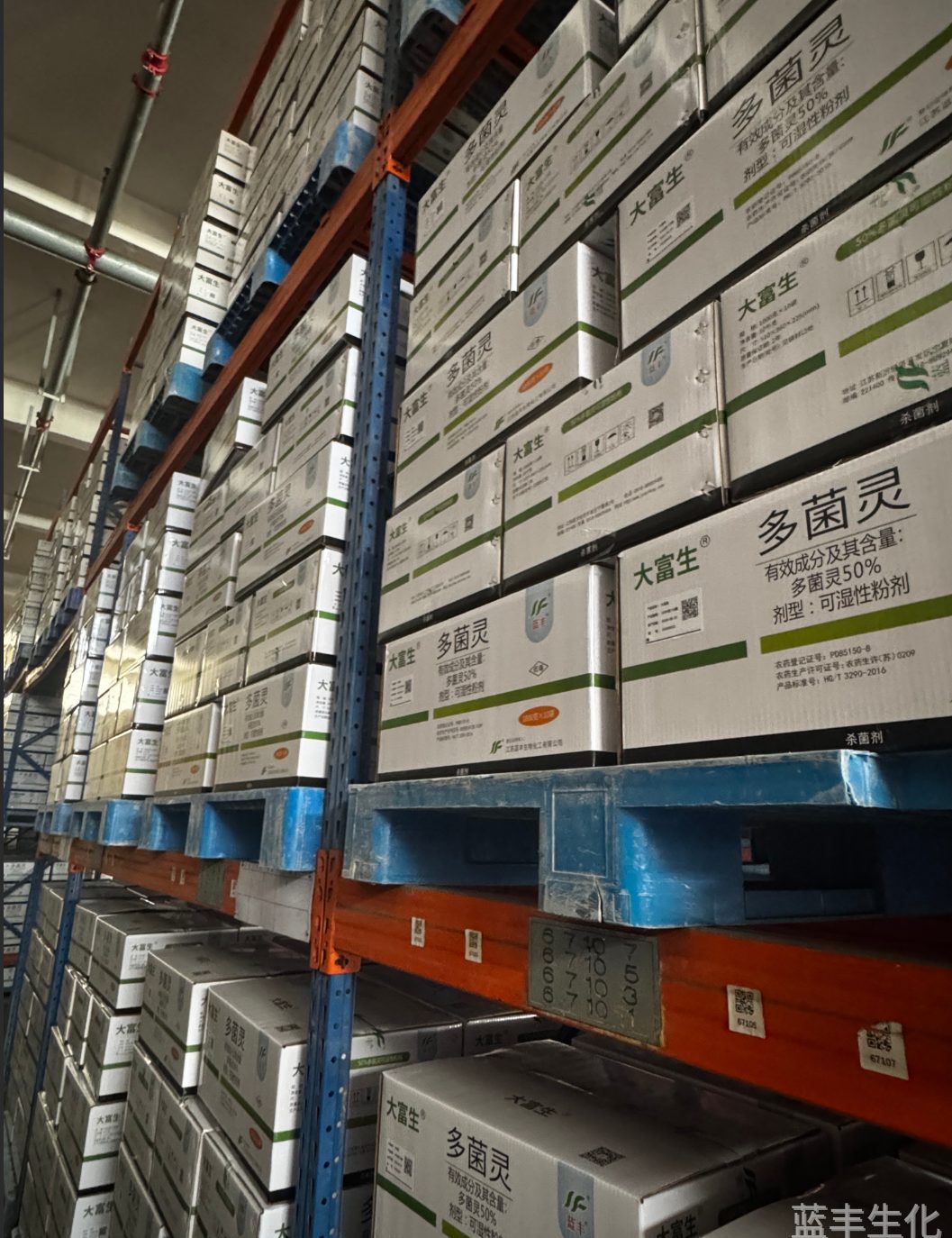
The mechanism of action of this product involves disrupting the formation of the mitotic spindle during fungal mitosis, thereby affecting cell division. It is effective against Ascomycetes and Deuteromycetes (Fungi Imperfecti), but ineffective against diseases caused by Oomycetes and bacteria. It possesses both protective and curative effects.
| Crop | Target | Dosage | Method |
|---|---|---|---|
| Ginseng | Rust rot | 5-10 g/m2 | Irrigation / Drench |
| Fruit trees | Disease | 500-1000X dilution | Spray |
| Cotton | Seedling diseases | Seed:drug ratio 1:100 | Seed dressing |
| Rice | Rice blast | 100 g/mu | Spray |
| Rice | Sheath blight | 100 g/mu | Soil drench / Drip |
| Rapeseed / Oilseed rape | Sclerotinia stem rot | 150-200 g/mu | Spray |
| Peanut | Bakanae / Damping-off | 100 g/mu | Soil drench / Drip |
| Lotus root | Leaf spot | 50-60 g/mu | Spray |
| Wheat and cereals | Fusarium head blight | 100 g/mu | Spray |
The optimal timing for application of this product is before disease onset or at the early stage of disease development. Apply at intervals of 10–15 days. Ensure uniform coverage during application, thoroughly wetting the fruit, leaf surfaces, and leaf undersides. Do not apply under windy conditions or when rainfall is expected within 1 hour. The pre-harvest intervals (PHI) for this product are: apple, 28 days; citrus, 30 days; grape, 21 days; watermelon, 14 days; banana, 35 days; wheat, 20 days; rice, 30 days; peanut, 20 days; rapeseed, 41 days. The maximum number of applications per crop cycle is: apple, 3 times; citrus, 3 times; grape, 2 times; watermelon, 3 times; banana, 3 times; wheat, 2 times; rice, 3 times; peanut, 3 times; rapeseed, 2 times.