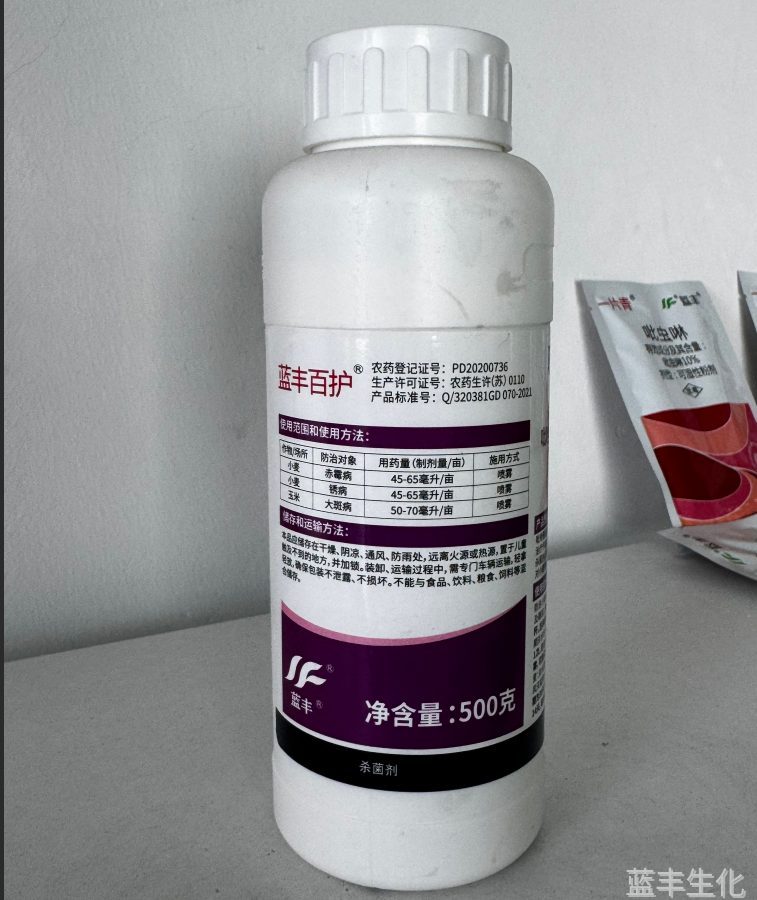
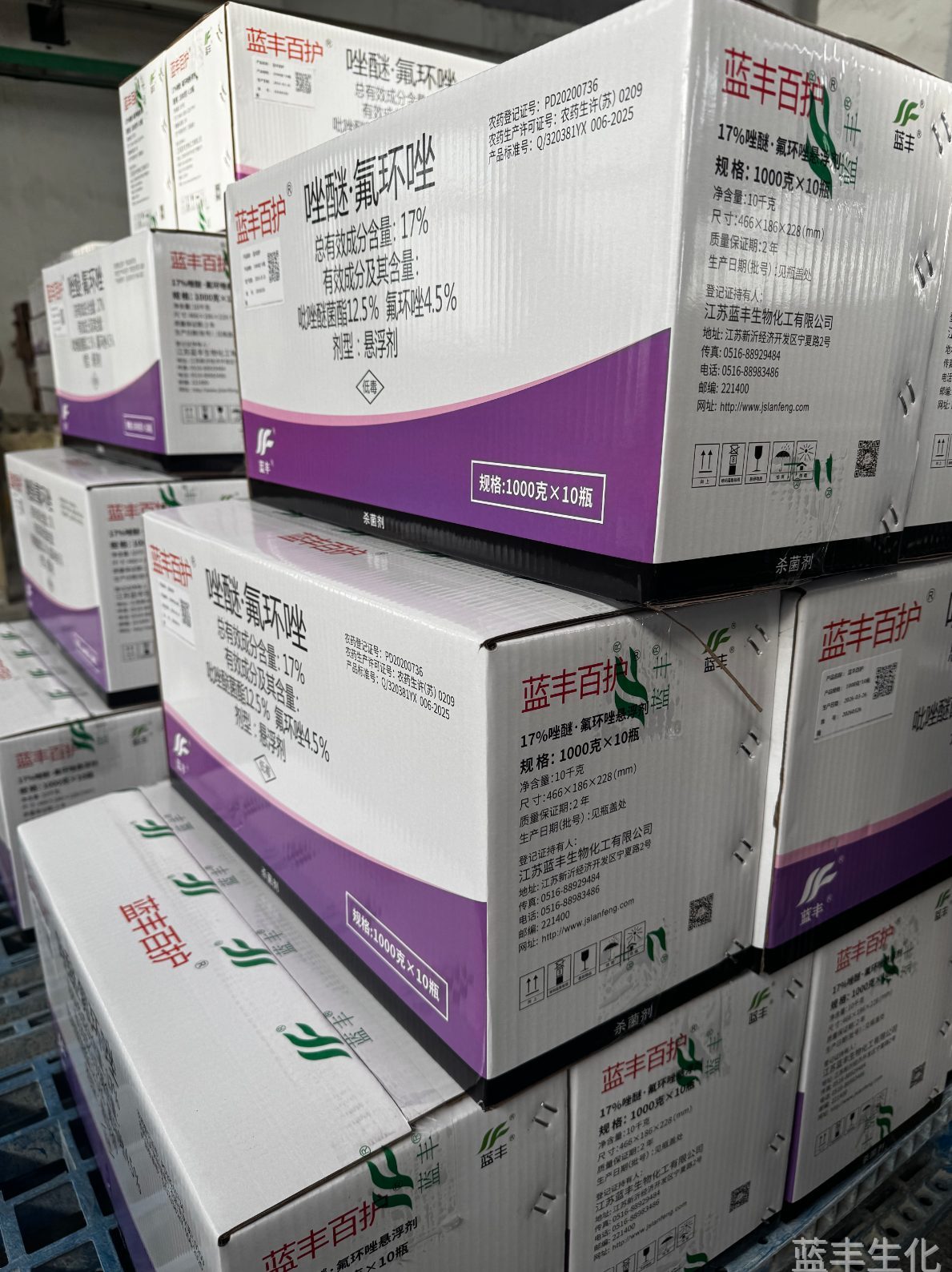
Pyraclostrobin is a methoxyacrylate fungicide with excellent protective and curative activity. Epoxiconazole is a triazole fungicide with systemic and curative properties, which can be absorbed by plant stems and leaves and translocated acropetally and outward. The combination of the two is used for the control of wheat rust, Fusarium head blight, and northern corn leaf blight.
| Crop | Target | Dosage | Method |
|---|---|---|---|
| Wheat | Fusarium head blight (FHB) | 45-65 mL/mu | Foliar spray |
| Wheat | Rust | 45-65 mL/mu | Foliar spray |
| Maize | Northern leaf blight | 50-70 mL/mu | Foliar spray |
1. For the control of wheat Fusarium head blight, do not apply after wheat flowering; application is permitted only before flowering or at the early flowering stage. Avoid post-flowering application to reduce the risk of mycotoxin contamination. Ensure thorough coverage of the spikes. 2. For the control of wheat rust, apply by uniform foliar spray before disease onset or at the early stage of disease development. A second application may be made at an interval of 7–14 days, depending on disease severity. 3. For the control of northern corn leaf blight, apply conventional foliar spray at the early stage of disease development. Up to two applications may be made, with an interval of 7–10 days between applications. 4. Spray evenly and thoroughly. For wheat diseases, the recommended water volume is 30–50 kg/mu. For corn diseases, the recommended water volume is 45–60 kg/mu. Prepare the spray solution immediately before use, mixing the product with water at the time of application, and use the prepared solution without delay. Thoroughly clean the sprayer after use. 5. Do not apply under windy conditions or when rainfall is expected within 1 hour. 6. The pre-harvest interval (PHI) on wheat is 30 days, with a maximum of 2 applications per growing season. The pre-harvest interval on corn is 14 days, with a maximum of 2 applications per growing season.