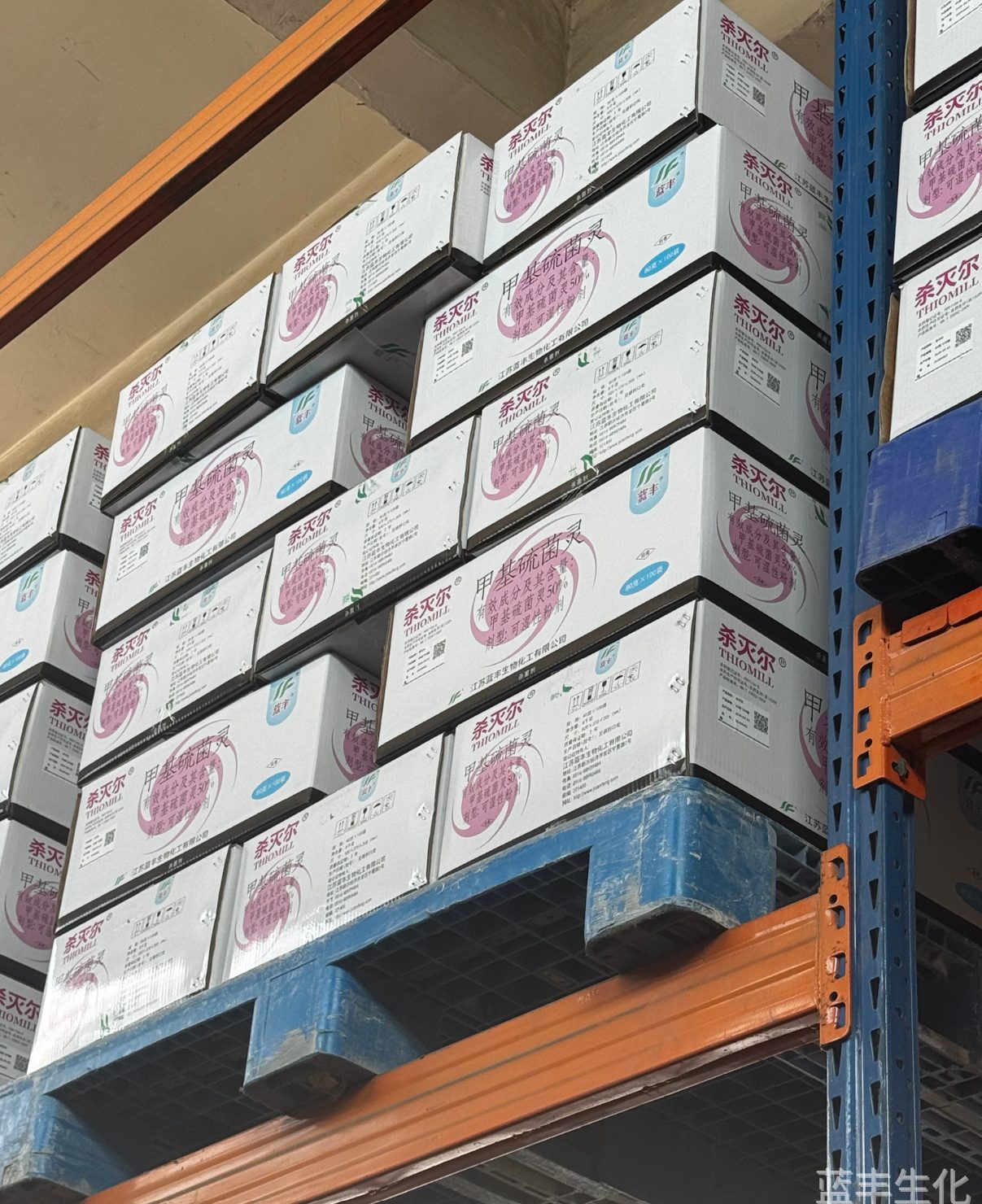
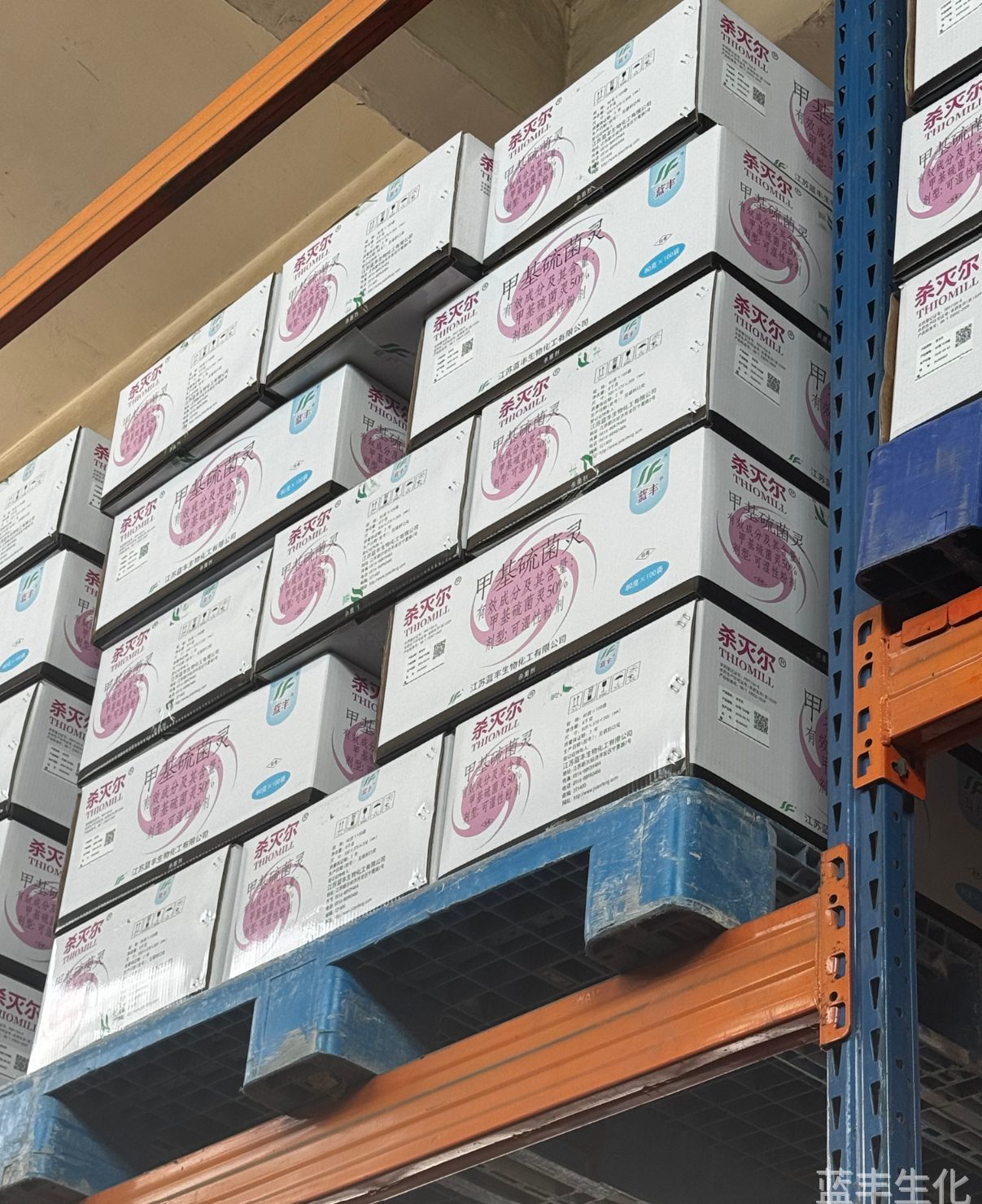
Thiophanate-methyl belongs to the benzimidazole group. It is a systemic fungicide that controls a wide range of crop diseases and has systemic, preventive and curative activity. In plant tissues it is converted into carbendazim, which interferes with the formation of the mitotic spindle in fungi, thereby affecting cell division.
| Crop | Target | Dosage | Method |
|---|---|---|---|
| Wheat | Fusarium head blight (FHB) | 100-140 g/mu | Foliar spray |
| Pear | Scab | 1:1100-1400 dilution | Foliar spray |
| Rice | Rice blast | 140-200 g/mu | Foliar spray |
| Rice | Sheath blight | 140-200 g/mu | Foliar spray |
| Cucurbits | Powdery mildew | 45-67.5 g/mu | Foliar spray |
| Sweet potato | Black rot | 1:1111-1389 dilution | Tuber dipping |
| Tomato | Leaf mould | 50-75 g/mu | Foliar spray |
| Apple | Ring rot | 1:700 dilution | Foliar spray |
1. This product is used to control diseases of crops such as tomato, cucurbits, apple, pear, rice and wheat. The optimum time of application is before the onset of disease or during the early stage of infection. Apply by foliar spray once every 10-15 days. For sweet potato tuber treatment, soak the tubers at the recommended rate for 5-10 minutes, then air-dry before storing. 2. Spray as uniformly as possible, covering the fruit, both the upper and lower leaf surfaces of the plants. 3. Do not apply on windy days or when rain is expected within 1 hour.