Peanut leaf spot is the most common foliar disease of peanut, primarily classified into brown spot and black spot. During rainy and humid summer-autumn conditions, it causes severe defoliation and a sharp reduction in photosynthetic area, directly affecting pod filling and yield. For the control of peanut leaf spot, it is essential to suppress the disease at the early stage of infection and to use fungicides that provide both protective and curative activity—sulfur·carbendazim combination products are a common choice in this regard. Lanfeng Jinduo 50% Sulfur·Carbendazim Wettable Powder is registered for use against peanut leaf spot.
The lesions of brown spot are relatively large, nearly circular, brown in color, with a yellow halo at the margin; the lesions tend to be larger and lighter in color. Those of black spot are small and round, ranging from dark brown to black, with tiny black dots on the upper surface. The two diseases often occur together, both starting from the lower older leaves under high humidity conditions and spreading upward. Once heavy defoliation occurs, the peanut vines become bare, and the pods fail to fill properly.
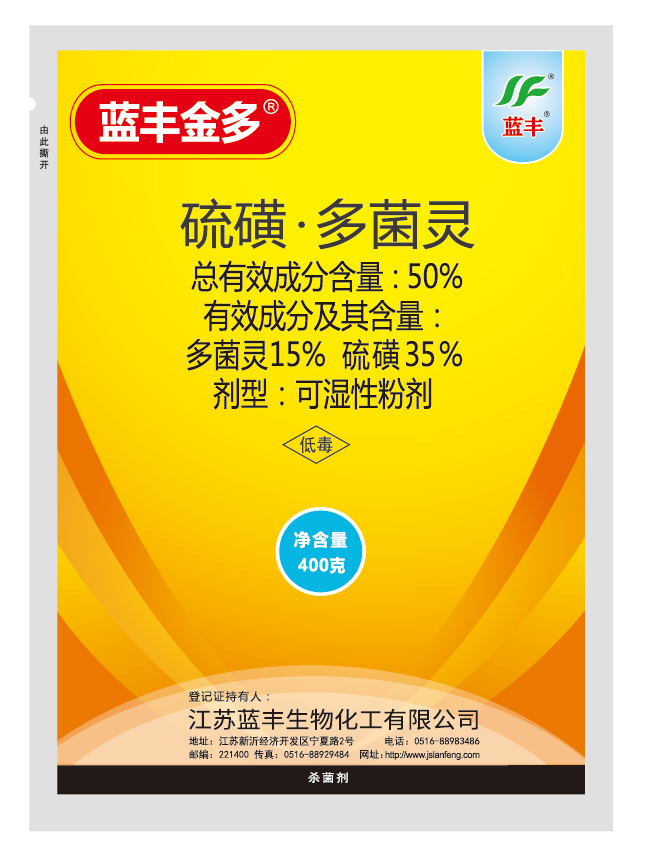
This formulation combines one component for protection and one for curative action: sulfur is a traditional protective ingredient that inhibits fungal spore germination, while carbendazim is a benzimidazole systemic fungicide that penetrates leaf tissues to exert therapeutic effects. Together, they achieve both prolonged efficacy and curative performance. Lanfeng Jinduo 50% Sulfur·Carbendazim Wettable Powder is registered for peanut leaf spot, applied at 160–240 g per mu with water spray, starting at the early stage of disease onset, with an interval of 7–10 days between applications.
Peanut leaf spot disease typically first develops on the lower leaves. When spraying, be sure to thoroughly cover the middle and lower aged leaves as well as the abaxial leaf surfaces—do not spray only the upper new leaves. In fields where lesions have coalesced and extensive defoliation of older leaves has occurred, removing a round of diseased leaves before spraying will yield better control efficacy. After prolonged overcast and rainy weather, take advantage of a sunny break to apply a supplementary spray; do not wait until the disease reaches epidemic levels.
Sulfur is sensitive to high temperatures; spraying during the strong sunlight period at noon on hot, sunny days is not recommended, as it may cause leaf burn. Do not mix it with alkaline pesticides such as copper-containing formulations. For specific usage, refer to the product label, as varieties and resistance conditions vary by region.