Aphids are the most common piercing-sucking pests on wheat and vegetables, aggregating in clusters on tender leaves and ears to suck plant sap, while also transmitting viral diseases. In severe infestations, wheat yields can be reduced by 10–20%. The key to controlling aphids lies in selecting systemic insecticides that render the foliage toxic, causing aphids to die upon feeding—imidacloprid being a classic active ingredient of this type. Yipianqing 10% Imidacloprid Wettable Powder is registered for the control of aphids on multiple crops and planthoppers on rice.
Aphids tend to hide in tender shoots, leaf undersides, heart leaves, and the folds of panicles, making them difficult to reach with foliar sprays. Imidacloprid is a neonicotinoid systemic insecticide that, once applied to the foliage, can be absorbed and translocated within the crop. Aphids feeding on the toxic plant sap become poisoned. Therefore, complete spray coverage is not required; the key is to deliver the insecticide to newly emerged tender leaves and panicles.
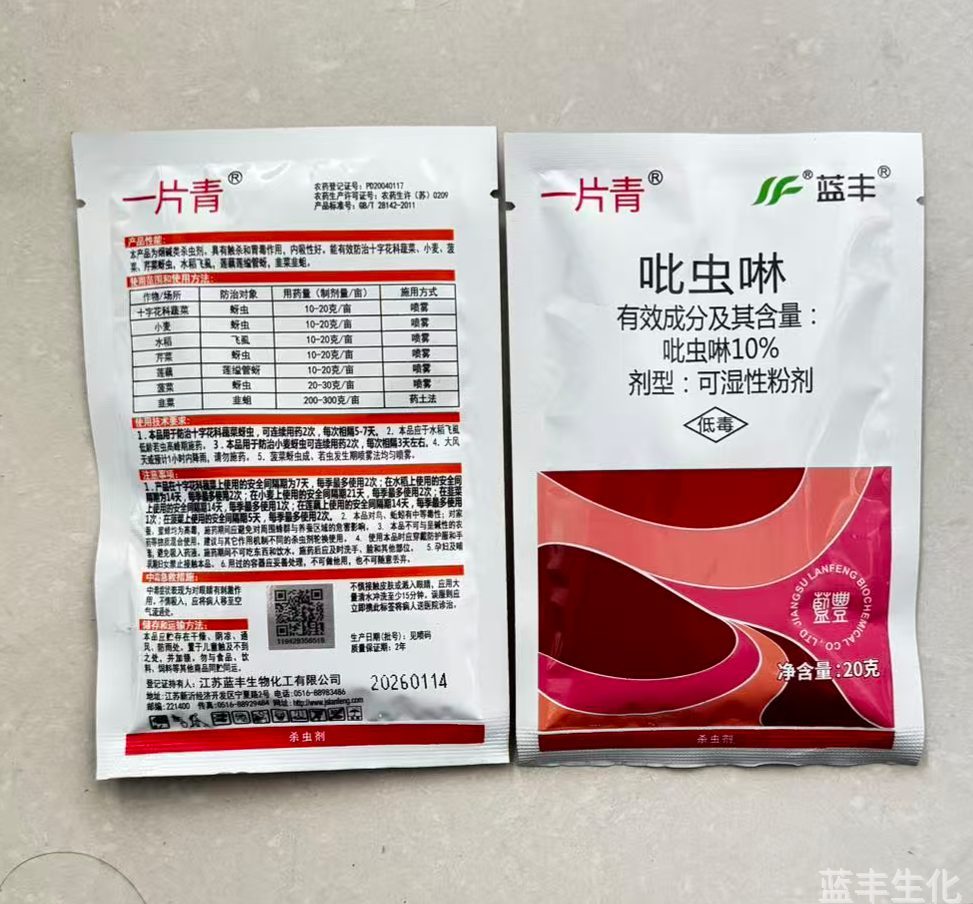
Yipianqing 10% Imidacloprid Wettable Powder is registered for controlling aphids on wheat and cruciferous vegetables. The recommended dosage is 10–20 g per mu (667 m²), mixed with water and applied as a foliar spray. Application should begin at the early stage of aphid infestation, with a follow-up spray at an interval of 5–7 days as needed. During spraying, pay special attention to tender shoots, the undersides of leaves, and the ear (spike) area. During the grain-filling stage of wheat, aphids migrate upward to the ears; therefore, the wheat ears must be thoroughly and uniformly covered with the spray solution.
Aphids reproduce rapidly; early detection and timely application are essential—do not wait until populations surge and leaves curl. Imidacloprid poses risks to bees; exercise caution during flowering periods and near apiaries. Rotate it with pyrethroid contact insecticides or alternate with products of different modes of action to delay resistance. Dosage should follow label instructions, as pest pressure varies by region.