Rice sheath blight is one of the most widespread and severely damaging diseases in rice-growing regions. The disease first manifests as dark green, water-soaked lesions on the basal leaf sheaths of affected plants, which then expand around the stem to form cloud-like patterns. In severe cases, it leads to panicle blight and lodging. The critical period for controlling rice sheath blight is the high-incidence window from the late tillering stage to the booting stage. Systemic fungicides are the effective choice, with triazoles such as epoxiconazole being highly efficient. Qiuzan epoxiconazole 125 g/L suspension concentrate is registered for the control of rice sheath blight.
Sheath blight spreads via sclerotia and mycelia, thriving under high temperature, high humidity, and dense canopy conditions with poor light penetration. During the mid-to-late growth stages, when rice plants close canopy and field humidity is elevated, the disease first infects the lower leaf sheaths and then progresses upward to the upper leaves and flag leaves. In severely affected fields, lodging and impaired grain filling are also common. The denser the canopy and the poorer the ventilation, the earlier preventive fungicide application should be scheduled.
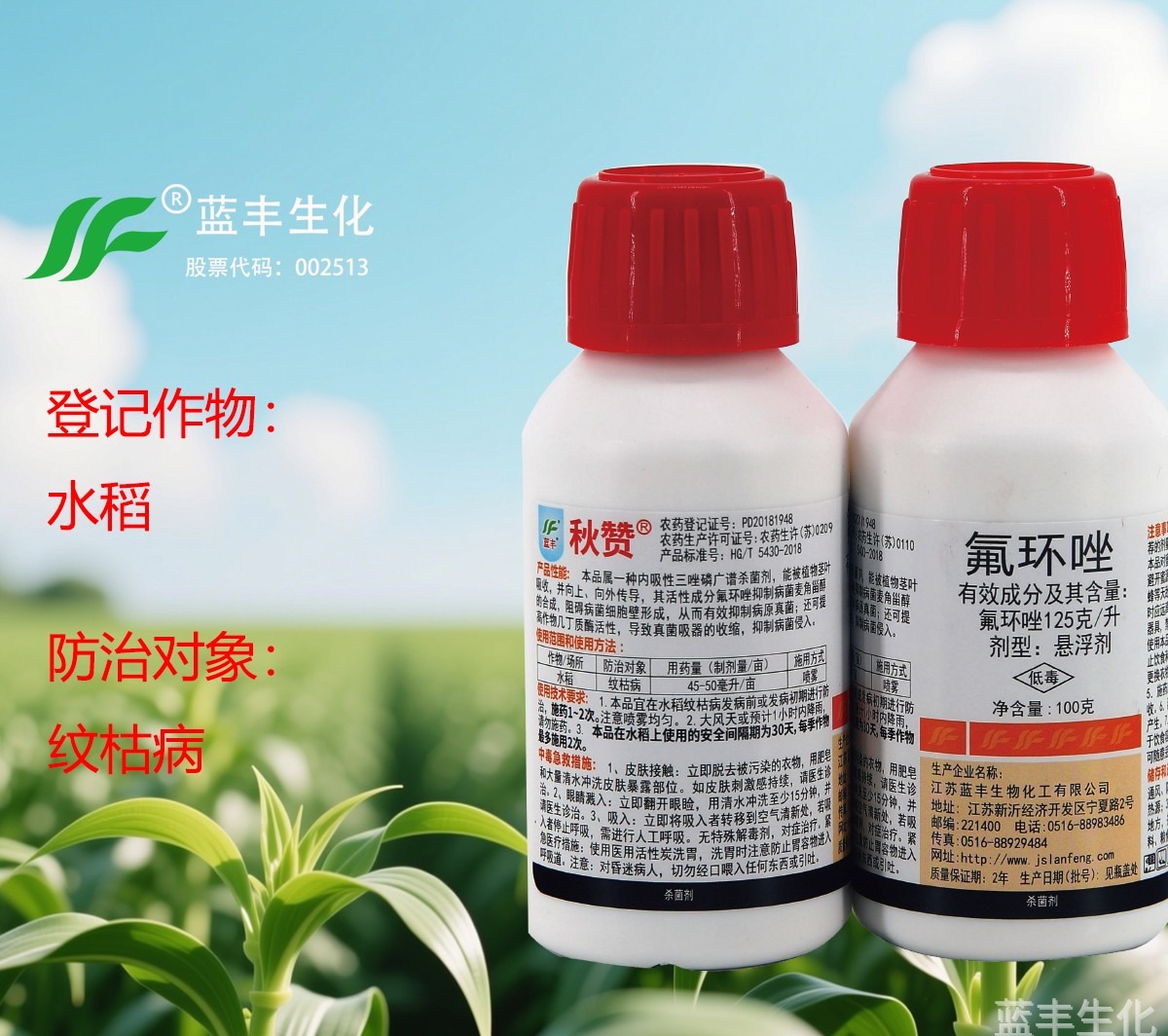
Epoxiconazole is a triazole systemic fungicide that, after absorption by rice plants, undergoes upward translocation and inhibits ergosterol biosynthesis in pathogenic fungi. It provides both protective and curative activity against sheath blight, and also offers supplementary control of rice false smut. Qiuzan epoxiconazole 125 g/L SC is registered for the management of rice sheath blight and rice false smut, applied at a rate of 45–50 mL per mu with water as a foliar spray, typically once at the pre-booting stage and once at the full heading stage.
Sheath blight first occurs on the basal leaf sheaths, so when spraying, do not only target the upper leaves—lower the nozzle and ensure the spray solution reaches the middle-to-lower parts of the rice plant and the stem base to suppress the source of infection. After prolonged overcast and rainy weather, seize the first sunny day for a supplementary spray. In severely diseased fields, appropriately increase the water volume and thoroughly wet the plants.
Epoxiconazole has certain effects on aquatic organisms; do not discharge paddy water directly after application. The pre-harvest interval should follow the label instructions. For specific usage, refer to the product label.