Red spider mites (spider mites) are among the most persistent pest mites on fruit trees and various crops. Their tiny bodies hide on the undersides of leaves, where they spin silk webs, and they can develop resistance within just a few years. The key to controlling red spider mites lies in selecting an acaricide that is effective against all life stages of the mite—pyridaben is a classic fast-acting acaricide with activity across all developmental stages. Lanfeng Jinke 15% Pyridaben EC is registered for use against spider mites on apple trees.
The spider mite has a short generation time and rapid reproduction, completing a generation in just a few days during summer, with eggs, larvae, nymphs, and adults coexisting simultaneously. If the acaricide applied only targets adults but not eggs, the surviving eggs quickly hatch, making the infestation appear to "increase despite spraying." More problematic is that continuous use of a single chemical class for several years leads to resistance, resulting in progressively declining efficacy.
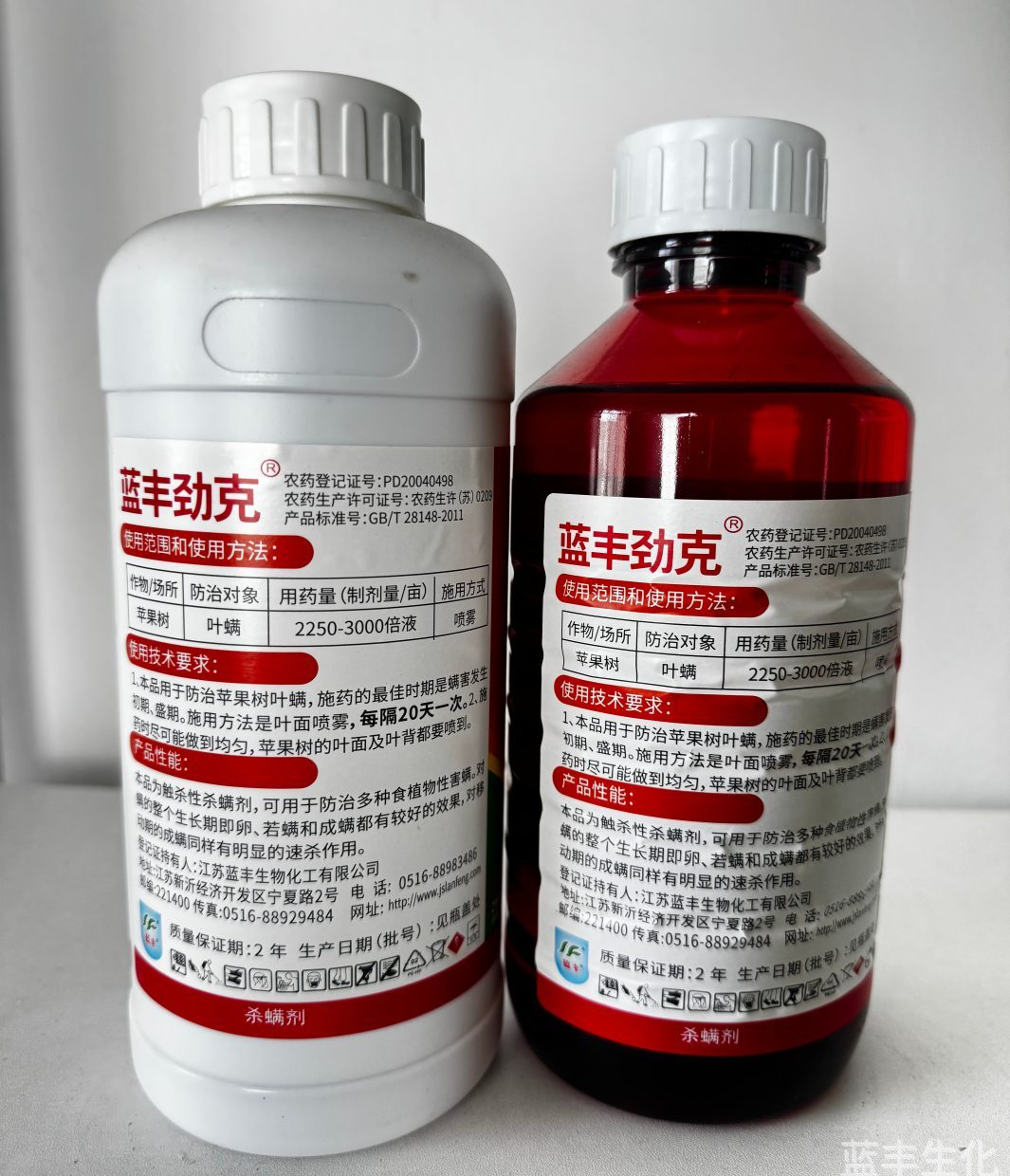
Pyridaben is a contact acaricide that is effective against all developmental stages of mites, including eggs, larvae, nymphs, and adults, and exhibits pronounced rapid knockdown activity against motile adult stages. Lanfeng Jinke 15% Pyridaben Emulsifiable Concentrate is registered for the control of spider mites on apple trees (also applicable to citrus red mite), applied as a foliar spray at a dilution rate of 2250–3000-fold with water. Application should be made during the early and peak stages of mite infestation, with a treatment interval of approximately 20 days.
Spider mites hide on the underside of leaves and produce webbing, so spray applications must thoroughly wet the leaf undersides. Use sufficient water volume, finer atomization, and, if necessary, add adjuvants to improve spreading and wetting. At the same time, pay attention to resistance management: rotate with acaricides of different modes of action, such as spirodiclofen and etoxazole, and avoid using a single product year-round. During full bloom, applications may affect honeybee colonies, so avoid spraying at that stage. For specific dilution rates, always follow the product label.